
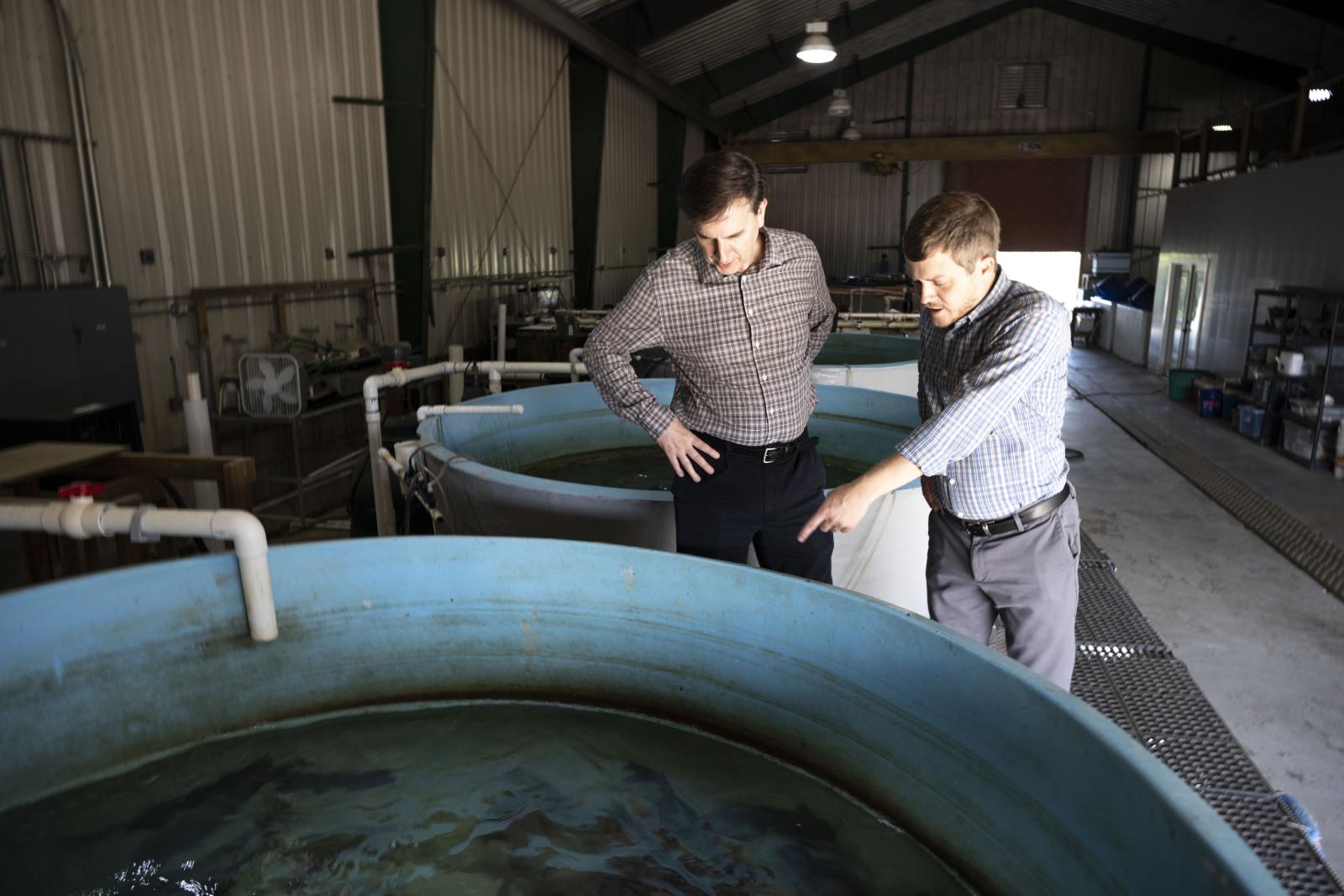
New U.S. Department of State award builds on GCAHFS's leadership in aquatic health, food security, and international research collaboration.
Mississippi State University's Global Center for Aquatic Health and Food Security (GCAHFS) will lead the new Feed the Future Innovation Lab for Fish through a five-year award from the U.S. Department of State, with an initial obligation of $8 million for the first year.
The award marks an important milestone for GCAHFS and reinforces its role in advancing research, innovation, and partnerships that strengthen aquatic food systems worldwide while delivering benefits for U.S. agriculture, industry, and food security.
Housed within GCAHFS, the Fish Innovation Lab will bring together researchers, U.S. universities, industry partners, government agencies, and international collaborators to develop and scale practical solutions addressing aquaculture production, aquatic animal health, fisheries, food safety, nutrition, and market development.
Building on a Strong Foundation
GCAHFS managed the previous Fish Innovation Lab from 2018 to 2025, supporting 30 multidisciplinary research activities in 10 countries and collaborating with more than 50 institutional partners.
The new program will build on the scientific expertise, partnerships, and lessons learned from that experience, with an increased emphasis on moving research discoveries into practical use.
"This new award allows us to build on what worked in the previous Fish Innovation Lab while putting even greater emphasis on moving research into use," said Dr. Mark Lawrence, GCAHFS director and William L. Giles Distinguished Professor at MSU. "We want to develop practical technologies that producers and businesses will adopt, create opportunities for U.S. companies in growing international markets, and address threats such as aquatic animal diseases before they reach American production systems."
Lawrence will direct the Fish Innovation Lab alongside Dr. Stephen Reichley, GCAHFS associate director, who served as deputy director of the previous program.
Advancing Aquatic Health and Food Security
The Fish Innovation Lab will pursue two interconnected objectives: improving sustainable management and production of aquatic foods and increasing access to safe, nutritious aquatic foods for families.
Research will address challenges across aquatic food systems, including fish health and biosecurity, improved feeds and genetics, sustainable fisheries management, food safety, nutrition, and market development.
A central priority will be translating research into practical innovations that can be adopted by producers, businesses, and communities. Through partnerships with U.S. companies and international organizations, the program will also seek to expand markets for American technologies and strengthen protection of U.S. aquaculture from emerging disease threats.
Strengthening GCAHFS's Global Research Leadership
The new Fish Innovation Lab expands GCAHFS's opportunities to connect expertise in aquatic animal health, aquaculture, fisheries, and food security with partners across the United States and internationally.
The award also follows the recent renewal of GCAHFS's designation as a Food and Agriculture Organization of the United Nations (FAO) Reference Centre on Antimicrobial Resistance and Aquaculture Biosecurity. Together, these initiatives highlight the center's role in addressing aquatic health challenges through scientific research, technical collaboration, and international partnerships.
As the new Fish Innovation Lab begins, GCAHFS looks forward to building on existing partnerships, welcoming new collaborators, and advancing innovations that create lasting benefits for aquatic food systems in the United States and around the world.
Learn more: Visit the Fish Innovation Lab website for program updates, research highlights, and opportunities to engage.
Read the official Mississippi State University announcement.